Roy Keane’s Dishonesty & Lack of Integrity
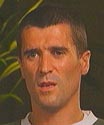
In the aftermath of the Saipan affair in June 2002 Roy Keane has gone to some lengths to present himself as individual of integrity and principle, and a man of – sometimes brutal – honesty. Roy Keane’s autobiography states that at the age of 19:
“My first few weeks as a professional player…confirmed what I supposed I’d always known: the world was full of bluffers, con-men and whingers; in this particular case guys who were content to wear the badge of professionalism without meeting the standards required to justify that status.”
The problem is that in that same autobiography, and from other sources, it is clear that throughout his life in football Keane was has often been less than professional, has been unprincipled and lacked integrity.
Keane Reneges on Deal with Cork City
As an 18 year old Keane signed forms committing himself to Cork City. Cobh Ramblers subsequently approached him to sign for Ramblers. Because the Cobh side could offer him a much sought-after place on a soccer FAS course Keane signed for Ramblers despite having signed for Cork City already.[Page 15]. Ramblers managed to get their papers registered with the FAI first so Roy Keane became a Cobh Ramblers player.
Keane Abuses Clough’s Generosity
During his Nottingham Forest days Keane repeatedly made requests of Brian Clough to be allowed to return to Cork between matches. Demonstrating a degree of manipulation these request were made “…usually after a good result”. Aware that he had a footballing gem on his hands Clough usually indulged the young rising star.
In his own words “In truth, I abused Clough’s generosity…” by going on major drinking sessions. [Page 36]. At the time Keane felt that he owed Clough a debt of gratitude yet still felt no compunction about abusing Clough’s generosity.
Keane Engages with Blackburn ‘Tapping’
While he was still at Forest Keane was approached by Blackburn Rovers about a possible move to Rovers. “I knew ‘tapping’ players in this way was against the rules…”[Page 63] yet Keane went along with the process as it strengthened his negotiating position with Forest. This was the club that gave him his break in English football and, at the time, looked to be doomed to relegation.
Keane Reneges on Deal with Blackburn
Nottingham Forest were relegated despite Keane’s best efforts on the soccer pitch. In 1992 Blackburn Rovers manager Kenny Dalglish persuaded Roy Keane to sign for Rovers for a transfer fee of £4m [Page 79]. The transfer forms could not be finalised for a couple of days because of the weekend but Keane and Dalglish “…shook hands” on the deal.
News of the deal appeared in a newspaper report on the Saturday which was read by Sir Alex Ferguson. Ferguson had been interested in signing Keane and reacted immediately by calling Keane to invite him over to his home.
Before Keane even met with Alex Ferguson he decided that he wanted to pull out of his deal with Kenny Dalglish and to sign for Manchester United. “From that moment (Ferguson’s phone call) I was never going to sign for any other club.”[Page 80].
Keane Lies to Alex Ferguson
After his transfer to Manchester United Roy Keane very quickly became involved in the drinking culture that existed at the club. When he was caught out telling a lie to Alex Ferguson about what time he got home after a drinking session he learned that “Honesty was the best policy.”[Page 107] from then on.
Keane Disregards Ferguson’s Wishes
In December 1997 Keane was still in the process of recovering from the Alf-Inge Haaland cruciate ligament incident. Because he was injured Keane had decided to join the reserves for their Christmas party on a Tuesday night as well as the first team party the next night. He got into a row with the barman who wanted to close the bar. Alex Ferguson heard about the row and called a meeting the next morning. Ferguson banned Keane from attending the Manchester United first team Christmas party. Anyone caught drinking with Keane that night would be banned.
“Outraged, I looked around the dressing room for support. None was forthcoming. F***ing w****rs I thought, before going to the manager’s office to protest. I got no joy…Betrayed by the good boys…I went out that night for my own Christmas party…The atmosphere was frosty for a few weeks.”[Page 177] A portent of things to come perhaps. A soccer manager trying to instil discipline on a situation calls a meeting of the players. Keane, the subject of the meeting, looks for support amongst the players present. None is forthcoming so he goes off and does his own thing regardless of his manager’s express wishes.
Keane’s Dishonest Portrayal of Gary Speed Tackle
After Roy Keane returned to the soccer pitch following his serious cruciate ligament injury for the 1998/99 season Keane resolved to put an end to his “…carousing days…I decided to bury Roy the Playboy.”[Page 181]. Despite this and by his own admission he went on a two day drinking binge on the Monday and Tuesday before the 1999 FA Cup Final on the approaching Saturday.
Following an altercation in Henry’s Bar in Manchester Keane was arrested by the Greater Manchester police in another bar, Quo Vadis. Keane spent the night in Bootle Street police station and was not released until midday on Wednesday 19th May 1999.
United went on to win the FA Cup Final against Newcastle but Keane only lasted eight minutes. Clearly his preparation for the game was a disaster and “A late tackle” [Page 205] by Gary Speed ended Keane’s involvement. The BBC match report described the tackle as “…a legitimate challenge by Gary Speed.” (BBC’s Report on 1999 FA Cup Final).
Rather than admit that it was his lack of professionalism just days before the FA Cup final that caused his quick exit he chose to lay the blame on an opponent.
Keane’s Dishonesty and Lack of Professionalism
The following Monday Keane flew out with Manchester to Spain for the European Cup Final even though he wouldn’t be playing due to suspension. In his autobiography Keane bemoans that fact that he had to share a room with Denis Irwin – “…two millionaire professional players … sharing a small space for three days…This is mad. Some people like to read, others to watch television. Some are early to bed, others not.” [Page 207]. One wonders why the millionaire Keane couldn’t have stumped up a single room supplement out of his own resources if it was such a problem for him.
Paul Scholes was also on the trip even though he too was suspended. They were left to their own devices so they joined some Manchester United fans for some drinks in the hotel bar. “Slightly p***ed club captain Roy Keane crept quietly to bed in the early hours. Fortunately Denis didn’t wake up. As far as I know.”[Page 208]. The next night Keane was drinking again, with Paul Scholes and Keane’s brothers. “It was 4.a.m. when I crept into the room, where Denis was sound asleep. And I had a few more beers on the Wednesday before…” the final. After the final which United memorably won 2-1 at the death Keane joined in with the rest of the team and “…drank the night away”[Page 212].
Roy the Playboy had made a Lazarus-like resurrection to embark upon some really hard drinking sessions. Keane’s autobiography clearly indicates that there were at least six nights of drinking out of ten. It may have been more because it seems unlikely that Keane would have resisted drinking on the night United won the FA Cup.
Roy Keane displayed a serious lack of professionalism and a flagrant disregard for his team mate, Denis Irwin, by coming back into the bedroom drunk at 4am on the morning of the European Cup Final. Re-read what Keane has to say about room sharing above. If Keane was so anxious for his team to succeed in the final but wanted to stay up late drinking why did he not pay for a separate bedroom or share with Paul Scholes? Keane’s actions were wholly unprofessional and paid scant regard to the needs of his team.
Conclusion
These examples of Keane’s dishonesty and lack of integrity are all taken from his own autobiography. On the one hand it could be argued this proves Keane’s honesty in that he has included them in his book and has not skirted around issues that reflect badly on him. However this misses the point. Keane revels in his reputation for rebelliousness. And like most rebels he can always offer his own personal justification for his actions. In each of the instances above Keane does just that. He always justifies his deeds by reference to some perceived slight or injustice that has been perpetrated against him. The problem with that is, it is borne out of a basic selfishness and so long as his actions don’t impinge on his own particular brand of integrity he feels totally justified in doing pretty much anything he wishes – regardless of the consequences for others.
NOTE: Unless stated otherwise all quotations are from:
Keane: The Autobiography; Roy Keane with Eamon Dunphy (2002); Michael Joseph Ltd
Roy Keane & Alf-Inge Haaland
Back to Saipan Affair Table of Contents – Irish Football
© 2009-2018 Soccer-Ireland.com. All rights reserved
All rights reserved. No part of this website may be reproduced, stored in or introduced into a retrieval system, or transmitted, in any form or by any means without prior written permission. No permission will be withheld to any reasonable requests.
Please contact Soccer-Ireland.com
| Saipan Table of Contents | Roy Keane & Eamon Dunphy |
| Saipan Introduction | Roy Keane & Cork |
| Methodology | Keane’s Aversion to Being Away From Home |
| Saipan Conclusions | Roy Keane’s Relationship with Ireland |
| Roy Keane – Mick McCarthy Relationship | Roy Keane – Zenith Data Systems Cup |
| Roy Keane Version of Saipan Incident | Roy Keane – Jack Charlton Relationship |
| Mick McCarthy Version of Saipan Incident 1 | Roy Keane’s Flawed Character |
| Mick McCarthy Account of Saipan Incident 2 | Roy Keane’s Good Character |
| Niall Quinn Version of Saipan Incident | Roy Keane – Footballer |
| Jason McAteer Version of Saipan Incident | Roy Keane – Team Captain |
| Matt Holland Version of Saipan Incident | Roy Keane – Family Man |
| Roy Keane & Saipan – The Backdrop | Roy Keane & Faking Injury |
| Roy Keane & Saipan – The Issues | Roy Keane – Bad Boy |
| Keane / McCarthy Boston Row 1992 | Roy Keane – Career Lows |
| Keane Misses Iran Playoff Game | Roy Keane – Red Cards |
| Keane Misses Niall Quinn Testimonial | Roy Keane – Cruciate Injury |
| Countdown to Saipan Incident | Roy Keane & Alf-Inge Haaland |
| Roy Keane Saipan Tirade at Mick McCarthy | Roy Keane & Gareth Southgate Red Card |
| Roy Keane / Tom Humphries Saipan Interview 1 | Roy Keane & Alan Shearer Red Card |
| Keane / Humphries Saipan Interview 2 | Roy Keane / Alex Ferguson Relationship 1 |
| Roy Keane / Irish Times Saipan Interview 3 | Roy Keane & Sir Alex Ferguson 2 |
| Roy Keane / Paul Kimmage Saipan Interview 1 | Roy Keane & Charity |
| Keane / Kimmage Saipan Interview 2 | Roy Keane & Autobiography Contradictions |
| Roy Keane / Sunday Independent Saipan Interview 3 | Roy Keane & Contradictions |
| Roy Keane / Tommie Gorman Interview 1 | Roy Keane – Integrity |
| Roy Keane / Tommy Gorman Interview 2 | Roy Keane – International Matches |
| Roy Keane / RTE Interview 3 | Roy Keane – Football Record |
| FAI Involvement in Saipan Affair | Roy Keane & Sandwiches |
| Saipan Reaction of Irish Players | Roy Keane – Walker |
| Mick McCarthy – ‘crap player, crap manager’ | Saipan – Pacific Island |
| Roy Keane / Mick McCarthy Playing Record | I Keano – The Musical |
| Colin Healy – Forgotten Man of Saipan | Roy Keane – Football Manager |
| Saipan Ten Years Later | Roy Keane’s Dog Triggs |
| Roy Keane’s Autobiography | Saipan Bibiliography |
|
Roy Keane – View Seven Years After Saipan
|
Football Quotes on Saipan
|
Ireland at 2002 World Cup Finals – Irish 2002 World Cup Squad – Irish Group Matches
Ireland V Cameroon – Ireland V Germany – Ireland V Saudi Arabia – Ireland V Spain